
Demolition in Utah runs anywhere from a few thousand dollars for a shed or a driveway to tens of thousands of dollars for a full house teardown, and it always starts with a permit, a utility disconnect, and — for anything built before the 1980s — an asbestos inspection. A licensed demolition contractor coordinates all of it, then hauls debris and leaves a rough-graded lot.
Demolition Utah: Services, Permits, and Costs at a Glance
Whether you’re a homeowner staring down a teardown, a builder who needs a lot cleared, or a commercial property owner planning a tenant improvement, demolition in Utah follows the same basic sequence no matter where you are along the Wasatch Front. A contractor pulls the permit, coordinates utility disconnects with the power, gas, and water providers, schedules an asbestos inspection if the structure is old enough to require one, does the physical work, and hauls off the debris. Utah Demolition Pros covers Salt Lake City, West Valley City, Sandy, West Jordan, South Jordan, Herriman, Ogden, Layton, Provo, Park City, Logan, and St. George, and will travel outside that footprint for the right project. Every job includes the permit, disconnect coordination, asbestos inspection scheduling, debris haul-off with concrete and metal recycled, and a rough-graded lot when the work is done. Free written quotes come back within 24 hours.
What separates a straightforward job from a complicated one is almost always access, structure type, and what’s underneath or inside the building. A detached shed with clear driveway access is a one-day job. A house with a basement, tight lot lines, and asbestos-containing floor tile is a multi-week process before equipment even shows up.
Residential and Commercial Demolition Across the Wasatch Front
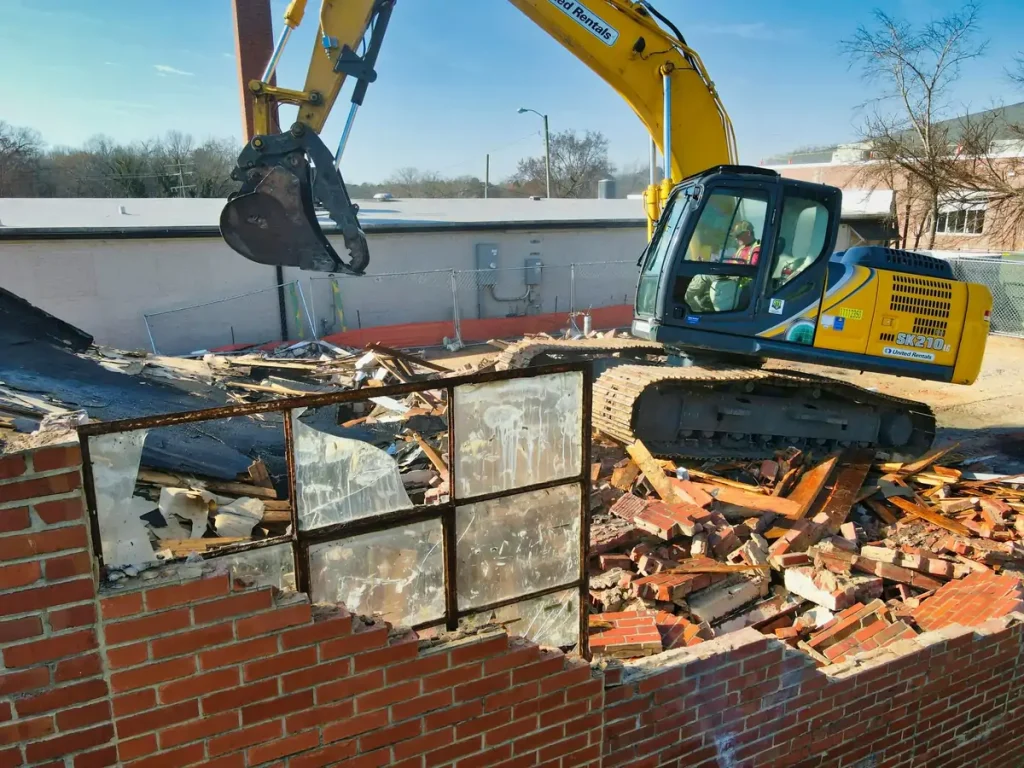
Most calls fall into one of two buckets: full residential teardowns or commercial site work.
Residential Demolition
Residential demolition covers full house teardowns, detached garages, foundations, and basements. If you’re planning a rebuild on a Salt Lake Valley lot, or you bought a property specifically to knock down and start over, this is the service that clears the way. Foundations and basements add cost and time because they involve more excavation and heavier material to break up and haul, so a quote for a house with a basement will always run higher than a slab-on-grade home of the same square footage. Details on the full scope live on the residential demolition service page.
Commercial Demolition
Commercial demolition covers tenant improvements, structure teardowns, and site clearing for developers and property owners. Tenant improvement work is usually the fastest turnaround because it’s interior-focused and doesn’t touch the building envelope, while a full structure teardown on a commercial parcel involves the same permit and utility disconnect steps as a residential job, just at a larger scale. Site clearing for a new build often means removing an old structure, breaking up existing pavement, and grading the lot flat for the next contractor. That work is covered under the commercial demolition service page.
Concrete Removal and Pool Removal Projects
Not every demolition job involves a building. A cracked driveway, a failing patio slab, or an old foundation left behind from a previous structure are common standalone jobs. Concrete removal covers driveways, patios, slabs, and foundations, and it’s often cheaper and faster than people expect because there’s no structure to strip out first — just breaking, loading, and hauling.
Pool removal is its own category with two very different outcomes. A partial removal breaks up the pool shell, punches drainage holes in the bottom, and backfills over it with engineered fill and compaction — a lower-cost option, but it limits what you can build over that footprint later. A full removal takes the entire shell out and backfills the excavation properly for future construction, which matters if you plan to build a structure, patio, or addition where the pool used to be. The tradeoffs between the two are laid out in detail in our guide to partial vs full pool removal, which is worth reading before you get a quote so you know which option fits your plans for the lot.
Interior Demolition and Structure Removal
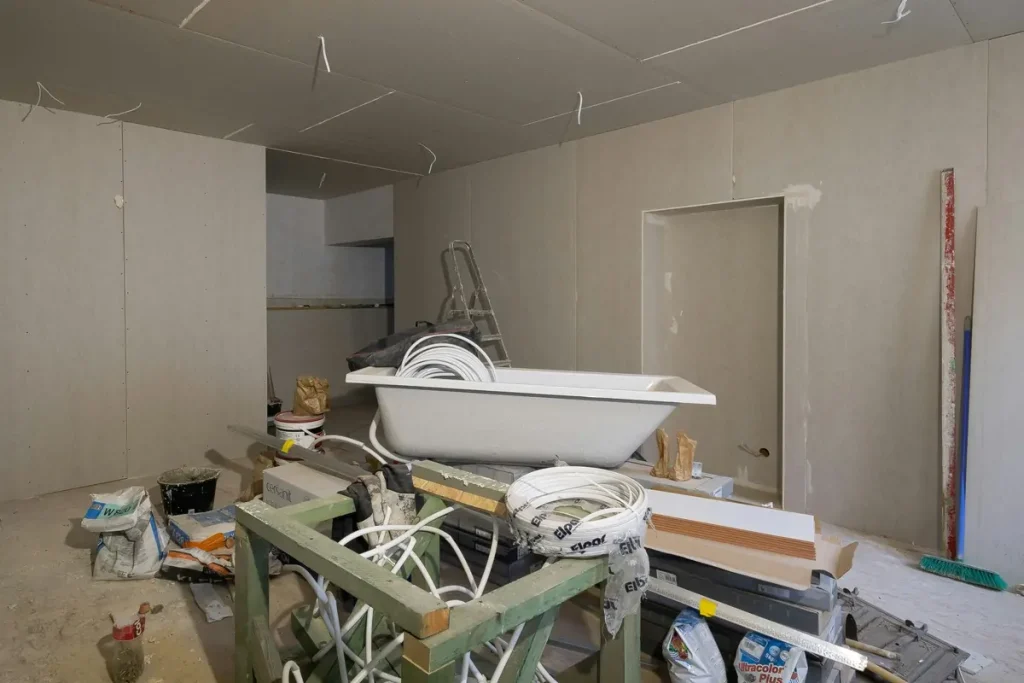
Before most remodels, someone has to strip the space back to bare framing. Interior demolition covers kitchen, bathroom, and full strip-outs — pulling cabinets, fixtures, flooring, and non-structural walls so a remodeling crew can start clean. This is a different scope than a teardown: the building stays standing, and the goal is a gutted, dust-controlled space ready for new construction.
Structure removal covers the smaller standalone jobs that still need a permit and a plan: sheds, decks, fences, barns, and chimneys. A lot of homeowners assume these are simple enough to skip a contractor entirely, but even a small detached structure can trigger a permit requirement depending on size and city, and a chimney removal touches the roofline and structural framing in ways that are easy to get wrong. See the sheds, decks, and fences service page for what’s included.
What Demolition Costs in Utah and What Moves the Number
The honest answer is that demolition cost in Utah is a range, not a fixed price, because four factors swing it in either direction: site access, whether there’s a basement or foundation to break up, whether asbestos is present, and how much material has to be hauled and disposed of by weight. A house on a tight urban lot with no alley access costs more to demolish than the same house on a large suburban lot an excavator can pull straight up to. A full breakdown of these cost drivers, with actual price ranges for each service type, is in our Utah demolition cost guide. The short version: get a written quote before you assume a number, because the range between a clean, easy-access job and a complicated one is wide enough that a phone estimate isn’t worth much.
Permits and the Pre-Demolition Timeline Along the Wasatch Front
Permit rules vary by city along the Wasatch Front, but a few things are consistent. Salt Lake City, for example, requires a permit for detached structures over 200 square feet — smaller sheds and structures may not need one, but it’s worth confirming with the city before assuming you’re exempt. Utility providers typically require a disconnect letter before a permit is finalized, which is why coordinating gas, power, and water disconnects early keeps a project on schedule instead of stalling it in week two.
Asbestos adds its own timeline. If a survey finds asbestos-containing material, Utah law requires a 10-working-day notification to the state before demolition can begin — that’s a fixed waiting period, not something a contractor can rush. The Utah Division of Air Quality, part of the Department of Environmental Quality, oversees that notification process. Building the asbestos survey and notification window into your schedule from day one is the single biggest thing homeowners underestimate about how long a teardown actually takes. For the city-by-city detail on permits, see our Salt Lake City demolition permit guide.
Where Demolition Debris Goes After the Job
Debris from a demolition job in Utah doesn’t all go to the same place. Concrete and metal are recycled where possible, which cuts down on landfill weight and, in some cases, on disposal cost. Wood, drywall, and mixed construction debris typically go to a construction and demolition landfill or transfer station. If asbestos was found and abated, that material follows a separate, regulated disposal path. We cover exactly where each material stream ends up in our post on demolition debris in Utah, including what gets recycled and what doesn’t.
Best Time of Year to Schedule Demolition in Utah
Utah’s seasons genuinely affect a demolition schedule. Frozen ground in the winter months makes excavation slower and can delay foundation and basement removal. Spring runoff raises water table concerns on sites near creeks or with high groundwater, which matters for pool and foundation removal in particular. Summer brings its own issue: dust control becomes a bigger part of the job, especially on interior strip-outs and dry-lot teardowns, and cities may have dust ordinances that affect how work is staged. None of these are reasons to avoid demolition at a given time of year, but they’re reasons to talk through timing with your contractor rather than assume every month looks the same on a job site.
Getting a Free Demolition Quote
The fastest way to get a real number instead of a guess is a written quote based on your specific property, access, and structure. Utah Demolition Pros turns around free written quotes within 24 hours, covering the permit, utility disconnect coordination, asbestos inspection scheduling, debris haul-off, and rough grading as part of the job. If you’re weighing your options on an older house before committing to a teardown, our guide to getting rid of a house in Utah walks through teardown versus sale versus other paths. Otherwise, reach out through the contact page with your address and a rough description of the project to get a quote started.
Frequently asked questions
How much does demolition cost in Utah?
It depends heavily on the job. A shed or small concrete pad might run a few hundred to a couple thousand dollars, while a full house teardown with a basement can run into the tens of thousands. Access, whether there's a basement or foundation, asbestos, and disposal weight all move the number, which is why a written quote based on your specific property matters more than a general estimate.
Do I need a permit for demolition in Utah?
Most demolition work requires a permit, though the exact threshold varies by city. Salt Lake City, for example, requires a permit for detached structures over 200 square feet. Utility disconnect letters are also typically required before a permit is finalized. Check with your city's building department, or work with a contractor who pulls the permit as part of the job.
How long does a demolition project take in Utah?
A small structure like a shed can come down in a day. A full house teardown usually takes several weeks once you count the asbestos survey, the 10-working-day state notification if asbestos is found, utility disconnects, and permit issuance before equipment even arrives on site. The physical demolition itself is often the shortest part of the whole timeline.
What happens to demolition debris in Utah?
Concrete and metal are recycled where possible, cutting down on landfill weight. Wood, drywall, and other mixed construction debris typically go to a construction and demolition landfill or transfer station. If asbestos is found, it's abated and disposed of through a separate regulated process rather than going out with general debris.
Can I demolish a structure myself in Utah?
Sometimes, for very small structures, but there are real legal and safety limits, especially around asbestos handling, utility disconnects, and permit compliance. Getting it wrong can mean fines, a stalled project, or exposure to hazardous material. It's worth understanding the rules before attempting anything beyond the smallest, simplest structure on your property.
Have a project to price?
Free written quote within 24 hours. Send photos or schedule a site visit.