
The fastest way to get rid of a house in Utah is a full demolition teardown, which clears the lot for rebuilding in roughly 1-3 days of physical work once permits, utility disconnects, and an asbestos survey are done. Other routes include selling as-is, relocating the structure, or donating it to a fire department for training.
Your Options for Getting Rid of a House in Utah
Most homeowners weighing how to get rid of a house in Utah land on one of four paths. Which one fits depends on the house’s condition, your timeline, and whether you plan to rebuild on the lot or walk away entirely.
Full Demolition (Teardown)
Demolition is the right call when the structure is outdated, damaged, or simply in the way of a new build. It’s the most predictable option because you control the schedule instead of waiting on a buyer or a mover, and it ends with a cleared, rough-graded lot ready for a builder. This is the path most Salt Lake Valley homeowners choose when the goal is a teardown-and-rebuild.
Selling As-Is
If the house is livable but dated, selling as-is to an investor or a buyer planning their own renovation can skip demolition costs entirely. You’ll typically get less than market value for a move-in-ready comparable home, and you have no control over what happens to the structure afterward. This works best when the house isn’t structurally compromised and the land value isn’t the main draw.
Relocating the House
Moving a house to a new lot is possible in narrow cases, usually for older homes with historic or architectural value where a mover, a receiving lot, and road permits all line up. It’s expensive, slow, and depends heavily on the house’s construction and the distance it needs to travel, so it’s rarely the practical choice for a standard teardown.
Donating the House
Some fire departments and training programs will take a house scheduled for demolition and burn it for live-fire training, which can offset part of your demolition cost. Availability depends entirely on the department’s schedule and whether the structure meets their training needs, so it’s worth a call to your local fire district before you assume it’s an option.
What a Full House Teardown Actually Involves
A full residential teardown isn’t just knocking down walls. It’s a sequence: asbestos survey, utility disconnects, permit issuance, then the physical demolition, followed by debris haul-off and rough grading. On residential demolition jobs, that sequence also covers garages, foundations, and basements when they’re part of the teardown, not just the above-grade structure.
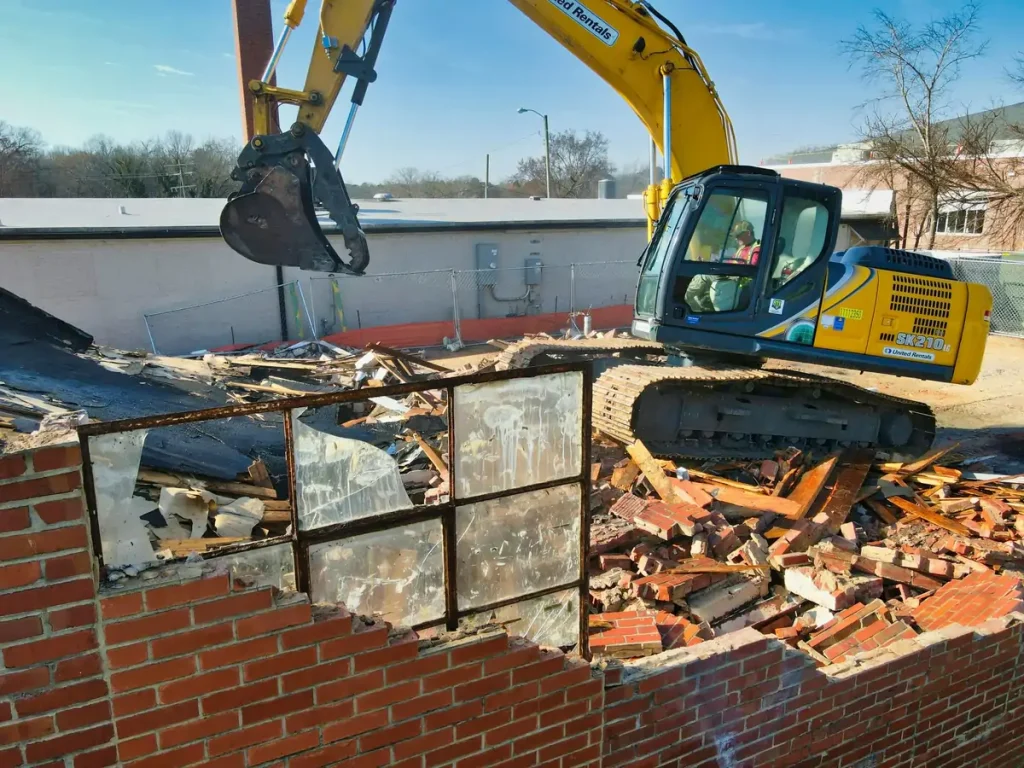
Concrete and metal recovered from the site get recycled where possible, and the lot is left rough-graded so a builder can start footings without additional site work. If your project also involves an old driveway, patio, or foundation slab that isn’t coming out as part of the house itself, that’s handled separately as concrete removal.
How Much It Costs to Get Rid of a House in Utah
Cost swings on a handful of factors: how easy the lot is to access with equipment, whether there’s a basement or foundation to remove, whether asbestos-containing materials turn up in the survey, and how much debris has to be hauled and disposed of by weight. A small rambler on an open lot with no basement costs far less to remove than a two-story house with a full basement on a tight, tree-lined lot.
Because those variables move the price so much, we don’t quote a flat number here — the full breakdown of what drives cost up or down, with real ranges, is covered in our Utah demolition cost guide. The most reliable number for your specific house is a written quote, which we turn around within 24 hours of a site walk.
Permits and Legal Steps Before You Can Demolish
You can’t legally tear down a house in Utah without a demolition permit from the city or county, and most jurisdictions along the Wasatch Front also require utility disconnect confirmation letters before that permit gets issued. Salt Lake City has its own process and thresholds, including how detached structures over 200 square feet are treated separately from the main house — details we’ve laid out in the Salt Lake City demolition permit guide.
Before any permit is approved, the house needs an asbestos inspection. If asbestos-containing materials are found, Utah’s Division of Air Quality requires a 10 working day notification window before demolition can proceed, per Utah Department of Environmental Quality rules. This isn’t a step you can skip or shortcut, and it’s one of the main reasons demolition timelines run longer than people expect. Some homeowners look into doing the teardown themselves to save money; we cover why that’s rarely a good idea, legally or practically, in our post on whether you can demolish a house yourself in Utah.
How Long the Process Takes
The physical demolition of a house is often the shortest part of the whole process — a day or two for most residential structures once crews are on site. What actually stretches the timeline is everything that happens first: scheduling the asbestos survey, waiting out the 10 working day DAQ notification if asbestos is found, coordinating utility disconnects with the gas, power, and water providers, and waiting on permit issuance from the city.
Add those steps together and a straightforward teardown can run several weeks from first phone call to a rough-graded lot, longer if asbestos abatement is needed or if the city’s permit queue is backed up. Winter and spring runoff can also affect scheduling on lots with soft or frozen ground, so if you have flexibility, plan for that when setting your timeline.
Which Option Makes Sense for Your Property
If you’re planning to rebuild on the same lot, demolition is almost always the straightest path — it puts you in control of the schedule and leaves you with a clean, graded lot instead of someone else’s renovation problem. If you’re not attached to the land and just want out, selling as-is avoids demolition costs but usually means a lower sale price and less certainty about what happens next.
Relocation and donation are worth a phone call if your situation fits — an architecturally significant house, or a local fire department actively looking for a training burn — but neither is a plan you should count on without confirming it first. For most Salt Lake Valley homeowners weighing how to get rid of a house in Utah, the practical move is a site walk, a written quote, and a clear permit and timeline picture before you commit either way.
If your property is in Salt Lake City or elsewhere along the Wasatch Front, the fastest way to get real numbers is a free written quote, which we return within 24 hours of seeing the property.
Frequently asked questions
Is it cheaper to demolish a house or sell it as-is in Utah?
Selling as-is avoids demolition costs outright, but you typically get less than market value since the buyer prices in the work or teardown they'll eventually pay for. Demolition costs money upfront but gives you a cleared lot you control, which matters if your plan is to rebuild rather than walk away from the property.
Can I demolish part of my house instead of the whole thing?
Yes — partial demolition is common for additions, damaged wings, or old garages attached to an otherwise sound house. It's a different scope than a full teardown and usually costs less, but it still needs a permit and, if the removed section has asbestos-containing materials, the same inspection and notification rules apply.
Do I need a permit to get rid of an old house in Utah?
Yes, every Utah jurisdiction requires a demolition permit before a house can legally come down, and most also require utility disconnect confirmation before that permit is issued. Requirements vary somewhat by city, so check with your local building department or see our Salt Lake City permit guide for one example of how the process works.
What happens to the debris after a house is torn down?
Debris is hauled off the site after demolition, and concrete and metal are recycled where recycling facilities are available. What can't be recycled goes to disposal by weight, which is one of the variables that affects total demolition cost, especially for larger houses or ones with full basements.
How do I know if my house has asbestos before demolition?
An asbestos inspection is a required step before any demolition permit is issued in Utah, not something you can guess at or skip. If the survey finds asbestos-containing materials, state rules require a 10 working day notification period before demolition can proceed, which is a common reason teardown timelines run longer than expected.
Have a project to price?
Free written quote within 24 hours. Send photos or schedule a site visit.