
Demolition in Salt Lake County covers everything from a single shed teardown in Sandy to a full commercial strip-out in downtown Salt Lake City. Utah Demolition Pros handles residential, commercial, concrete, pool, interior, and structure removal across the county, with every job including the permit, utility disconnect coordination, asbestos inspection scheduling, and debris haul-off.
What Demolition Services Cover Salt Lake County
Salt Lake County generates more demolition work than any other part of the Wasatch Front, simply because it has the most housing stock, the most commercial buildouts, and the most lots getting redeveloped. The jobs fall into six categories, and most contractors who work the county handle all of them under one roof rather than sending you to a specialist for each piece.
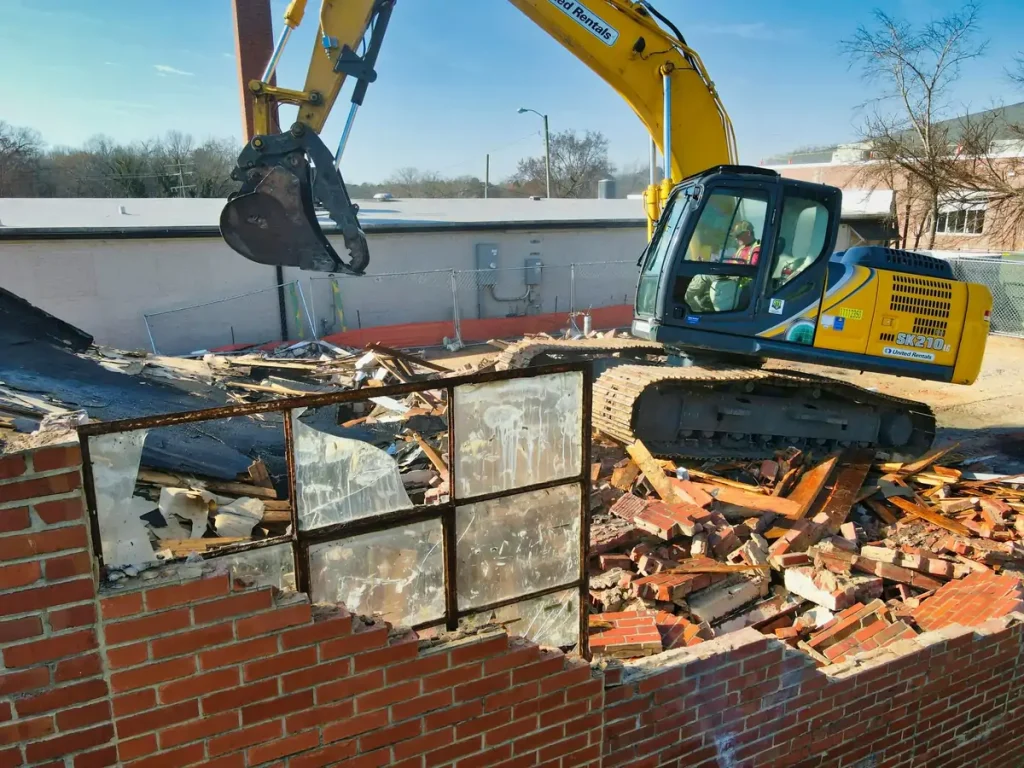
Residential demolition covers full house teardowns, garage removals, and foundation or basement demo ahead of a rebuild. Commercial demolition covers tenant improvement work, full structure teardowns, and site clearing for redevelopment. Concrete removal handles driveways, patios, slabs, and foundations that are cracked, sinking, or simply in the way of a new plan. Pool removal is either partial or full, with engineered backfill and compaction so the ground is stable enough to build on later. Interior demolition strips kitchens, bathrooms, or entire interiors down to the studs ahead of a remodel. Structure removal takes down sheds, decks, fences, barns, and chimneys that have outlived their usefulness. You can see the full breakdown on the services page.
Cities We Serve Across Salt Lake County
Salt Lake County is really a string of connected cities, and each one has its own building department, its own permit turnaround, and sometimes its own quirks in what gets flagged during review. Coverage across the county includes Salt Lake City, West Valley City, Sandy, West Jordan, South Jordan, and Herriman, along with the surrounding Wasatch Front cities. If your address falls anywhere in that footprint, the process looks the same: site visit, written quote, permit pull, asbestos inspection scheduling, and a scheduled demo date.
Salt Lake City carries the most permit paperwork of any city in the county because it’s the largest and has the most layered code. That’s covered in detail on the Salt Lake City location page. Smaller cities like Herriman and South Jordan tend to move faster on residential permits simply because they have fewer applications in the queue, but the underlying state requirements — the asbestos survey and the Utah Division of Air Quality notification window — apply the same way no matter which city you’re in.
What Every Salt Lake County Demolition Job Includes
Every demolition job booked through Utah Demolition Pros in Salt Lake County includes the same baseline scope, regardless of whether it’s a shed in the backyard or a commercial building downtown:
- The demolition permit pulled and filed with the correct city building department
- Utility disconnect coordination so power, gas, and water are safely cut before crews start
- Asbestos inspection scheduling, since state rule requires a survey before most structures come down
- Debris haul-off, with concrete and metal recycled wherever the receiving facility allows it
- A rough-graded lot left behind, ready for a builder, landscaper, or new slab
That last point matters more than people expect. A demolished lot that’s just a pile of dirt and debris pockets isn’t ready for anything. Rough grading levels the site enough that the next contractor — whether that’s a framer, a landscaper, or an excavator crew — can actually start work without doing cleanup first.
Permits and Regulations Vary by City in Salt Lake County
Utah state law requires an asbestos survey before most demolition, and once that survey is done, the Utah Division of Air Quality requires a 10 working day notification window before work can start on structures that require it. That timeline is consistent countywide because it’s a state requirement, not a city one. What changes city by city is how the local building department handles the permit application itself.
Salt Lake City’s Detached Structure Threshold
Salt Lake City treats detached structures under 200 square feet differently than larger buildings when it comes to permit requirements — a distinction that trips up a lot of homeowners removing a shed or small outbuilding. The full rules, including utility disconnect letters and what triggers a full permit review, are laid out in the Salt Lake City demolition permit guide.
Smaller Cities in the County
West Valley City, Sandy, West Jordan, South Jordan, and Herriman each run their own permit desk with their own forms and fee schedules, but the core requirements — proof of asbestos survey, utility disconnect confirmation, and an approved permit before demo starts — are the same across the board. If you’re not sure which office to call, the building department for your specific address is the authority on local rules; a contractor can walk you through the process but shouldn’t be your only source on zoning or code questions.
What Demolition Costs in Salt Lake County
Cost swings on the same handful of factors no matter where in the county the job sits: how much access equipment has for maneuvering, whether there’s a basement or foundation to break up, whether asbestos-containing material turns up in the survey, and how much debris weight has to be hauled and disposed of. A tight urban lot in Salt Lake City with alley access only costs more to work than a wide-open lot in South Jordan or Herriman, even for the same size house. A driveway or patio removal is a different price bracket entirely from a full house teardown.
Rather than guessing at a number, the most useful thing to do is get the specific ranges and cost drivers spelled out for your project type on the Utah demolition cost guide, then request a written quote for your actual address and structure. Quotes come back within 24 hours and reflect the site conditions, not a generic estimate.
How Long a Salt Lake County Demolition Takes
The pre-demolition timeline is the part most homeowners underestimate. Before any equipment shows up, the sequence runs: asbestos survey scheduled and completed, utility disconnects coordinated with the relevant utility companies, the permit application filed and approved, and — if the structure requires it — the 10 working day Utah Division of Air Quality notification window run out. That stretch alone commonly runs two to four weeks depending on how quickly the survey and permit come back, and Salt Lake City’s larger permit queue can push it toward the longer end.
Once permits clear and disconnects are confirmed, the physical demolition itself is usually the fastest part of the whole process — a single-family house typically comes down in a day or two, with haul-off and rough grading following shortly after. Interior strip-outs and concrete removal move even faster since there’s often less permitting overhead involved. Winter jobs in Salt Lake County can also run slower simply because frozen ground slows excavation and haul-off trucks, so anyone targeting a specific move-in or rebuild date should build the season into the schedule.
Getting a Quote for Your Salt Lake County Project
The fastest way to find out what your specific job costs and how long it will take is a site walk. A written quote covers the scope, the permit and inspection scheduling, and the haul-off, so there’s no guessing later about what’s included. Whether the project is a house teardown in West Jordan, a pool removal in Sandy, or a tenant improvement strip-out downtown, the process starts the same way: reach out through the contact page and describe the site, and a written quote comes back within 24 hours.
For projects that combine multiple pieces — say a pool removal plus a concrete patio, or an interior strip-out ahead of a full teardown — it’s worth mentioning everything on the property up front. Bundling scope into one quote and one mobilization is almost always cheaper than booking separate contractors for each piece, and it keeps the permit and inspection scheduling on a single, coordinated timeline instead of three overlapping ones.
Frequently asked questions
Does one contractor handle demolition across all of Salt Lake County?
Yes. Utah Demolition Pros covers Salt Lake City, West Valley City, Sandy, West Jordan, South Jordan, Herriman, and the surrounding Wasatch Front cities under the same process: site visit, written quote within 24 hours, permit pull, and scheduled demolition. Local permit rules vary by city, but the crew, equipment, and scope stay consistent countywide.
Do permit rules differ between cities in Salt Lake County?
The state asbestos survey and Utah Division of Air Quality notification apply the same way everywhere in the county, but each city runs its own permit desk with its own forms and turnaround. Salt Lake City has the most layered process, including a threshold for small detached structures; smaller cities tend to move faster simply due to lower application volume.
How much does demolition cost in Salt Lake County?
Cost depends on structure size, site access, whether a basement or foundation is involved, asbestos findings, and debris weight. A tight urban lot costs more to work than an open suburban one even for a similar-sized house. Get a written quote for your address rather than relying on a general estimate, since ranges vary by project type.
How long does a demolition project take from start to finish in Salt Lake County?
Pre-demolition steps — asbestos survey, utility disconnects, permit approval, and the 10 working day state notification window when required — commonly take two to four weeks. The physical demolition itself is usually much faster, often a day or two for a single-family house, followed by haul-off and rough grading.
Can I combine services like pool removal and concrete removal into one project?
Yes, and it's usually cheaper than hiring separate contractors. Bundling multiple scopes — pool removal, a patio slab, an old shed — into a single quote and mobilization keeps permitting and inspection scheduling on one coordinated timeline instead of several overlapping ones, and reduces repeat site setup costs.
Have a project to price?
Free written quote within 24 hours. Send photos or schedule a site visit.